The use of authentic voices in quit smoking campaigns
Encouraging people to quit smoking remains one of the toughest behaviour change challenges for public health teams.
As No Smoking Day approaches in March, our research at Westco Communications shows something stark: traditional Government and NHS messaging is simply not cutting through.
That was one of the key findings from one of England’s largest qualitative studies into smoking, where we held deep “World Café” conversations with 40 smokers across South London.
What we heard was clear: smokers are far more influenced by their peers than by official sources. Council ads that rely on NHS toolkits often feel distant, even mistrusted. And people are more motivated by the positive benefits of quitting than by fear-based health warnings.
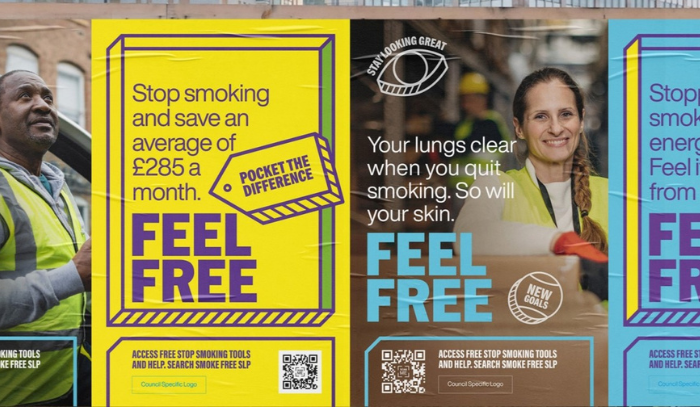
From insight to campaign: Feel Free
This insight inspired our new Feel Free campaign. The name says it all: the freedom from addiction, from breathlessness, from financial strain. The freedom to enjoy health, family, fitness, and lifestyle – the four biggest motivators that smokers themselves told us matter most.
And crucially, it’s not us doing the talking. It’s people like Faye from Wimbledon, who wants to quit for her children. Tom from Mitcham, who dreams of using the money saved for another holiday. Jodie from Sutton, who’s worried about her fitness. Vanessa from Wandsworth, who wants to feel younger. And Ian from Twickenham, who simply wants to walk round the park with his grandchildren “without feeling that my lungs are going to cave in.”
These voices cut through because they are real, local, and authentic. They build trust and credibility with our audience by 'socially norming' the desire to quit smoking.
The challenge: finding authentic stories
But let’s be honest – these stories don’t just fall into our laps. Smoking cessation services aren’t set up to capture powerful case studies.. That’s why we’ve worked differently.
In every area where the campaign runs, we’ve hosted mini World Cafés – safe, open conversations with smokers to share stories, barriers, and motivations. These sessions not only give public health teams rich insight, they also give participants the confidence and desire to share their story. As one told us: “It fills me with pride that I am helping other people on their quitting journey.”
From there, case studies naturally emerge – authentic, powerful, and relatable.
What next?
This approach may be too late for Stoptober, but it could powerfully shape your January push. If you want to harness local voices and deliver case studies that genuinely resonate, Westco can help you.
Case study examples (rolling film)
Author:
simon@westcocommunications.com